

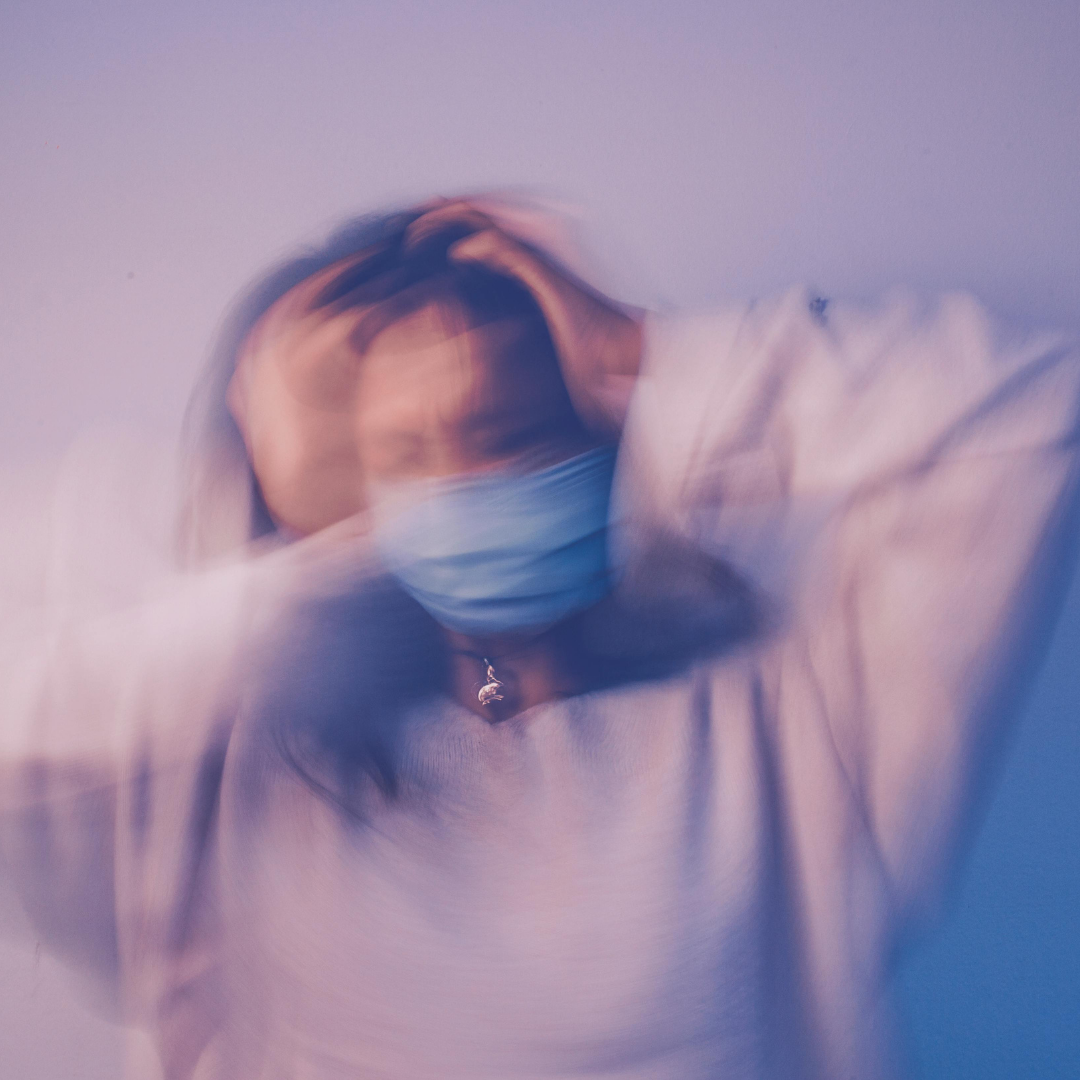
Masking is a term used to describe when a person presents themselves in one way on the outside, while what they are actually feeling or experiencing on the inside can be very different.
It is often associated with neurodivergent people, who may learn to hide parts of themselves or perform in ways that meet other people’s expectations. This can mean suppressing behaviours, copying others, forcing eye contact, holding in emotions or simply trying very hard to appear as though everything is fine.
But masking itself is a very human behaviour.
Most of us mask to some degree depending on where we are and who we are with.
The difference is that, for some neurodivergent people, masking can become almost constant, and incredibly exhausting.
Why do people mask?
Masking is usually much more prominent in environments where there are expectations about how somebody should behave.
Schools are a good example.
A neurodivergent child may spend the entire school day trying to sit still, concentrate, follow instructions, navigate friendships, cope with noise and sensory input and behave in the way expected of them.
From the outside, they may appear to be coping brilliantly.
Then they get home.
Suddenly, everything they have been holding in all day comes out.
They may cry, shout, withdraw, refuse to do things or become completely dysregulated. Parents can understandably be confused when school reports that their child is “absolutely fine”, yet the child they see at home is struggling enormously.
Home is often the place where children feel safe enough to finally unmask.
What looks like difficult behaviour may actually be a child whose nervous system has spent hours working incredibly hard to cope.
Adults mask too
It doesn’t disappear when we grow up.
An adult might get through an entire working day appearing sociable, organised and capable, only to come home and need hours alone to recover.
They may withdraw, immerse themselves in a hobby, read, sleep, sit in silence or simply need some time where nobody expects anything from them.
That isn’t necessarily antisocial behaviour.
Sometimes it is decompression.
And when somebody has spent years believing they need to perform a certain version of themselves to be accepted, they may not even realise how much they are masking.
Masking, women and late diagnosis
Masking is particularly important when we talk about neurodivergent women and girls.
There are biological and developmental differences between males and females, and neurodivergent traits do not always present in exactly the same way. Historically, much of our understanding and diagnostic criteria around conditions such as autism and ADHD developed from research and observations that disproportionately focused on boys and men.
Girls can sometimes become very skilled at observing the people around them, copying social behaviours and hiding their difficulties.
They may therefore look as though they are coping.
This is one of the factors thought to contribute to some women receiving diagnoses much later in life.
It doesn’t necessarily mean their difficulties weren’t there before. They may simply have become very good at hiding them.
The cost of constantly masking
The problem comes when someone rarely gets the opportunity to stop.
Children and adults who mask regularly can experience enormous levels of exhaustion. Over time, constantly suppressing your natural responses and working hard to meet expectations can contribute to stress and burnout.
This is why creating environments where neurodivergent people don’t have to work quite so hard just to exist within them is so important.
The aim isn’t necessarily to remove every expectation from somebody’s life.
It is to ask:
Which expectations are actually necessary, and which ones are making somebody work unnecessarily hard to fit in?
What can help?
Prevention is often much easier than waiting until somebody reaches complete dysregulation or burnout.
In schools and workplaces, reasonable adjustments can make an enormous difference. This could mean movement breaks, access to a quieter environment, sensory support, clearer instructions, flexible ways of working or simply recognising when somebody needs a moment away.
For children, I also think there is something incredibly valuable about what happens immediately after school.
Rather than expecting conversation, homework, tidying or another list of demands the moment they walk through the door, give them a chance to land.
A snack, a drink and some time without expectations can act as a little buffer between school and home.
Let their nervous system come down first.
The same applies to adults.
Build some decompression time into your day — time where there isn’t another demand waiting for you. You don’t have to be productive with it.
And find things that genuinely add value to your life.
Hobbies, art, reading, movement, being outdoors, making things, gaming — whatever allows your nervous system to settle and lets you feel more like yourself again.
There isn’t one correct way to regulate.
Sometimes the question simply needs to be:
What feels good for me? What helps me come back to myself?
We need to look beyond what we can see
Perhaps one of the biggest things we can learn about masking is that somebody appearing to cope doesn’t necessarily mean that they are.
A child behaving perfectly at school can still be struggling.
An adult succeeding at work can still be exhausted.
And somebody who falls apart when they finally reach a safe environment isn’t necessarily coping worse there. It may be the first place all day where they feel safe enough to stop holding everything together.
Instead of only looking at someone’s behaviour, we need to become curious about how much effort it is taking them to maintain it.
Because sometimes the person who looks like they’re coping the best is actually working the hardest just to appear that way.
For practical strategies for dyslexia, ADHD, autism and everyday overwhelm you can join my newsletter here: Newsletter
If you feel your child may benefit from personalised support, you are welcome to get in touch to discuss how coaching could help.
Sabine,
The Dyslexia Coach